At Boulder Holistic Functional Medicine in Boulder, Colorado, one of the most common — and most misunderstood — patterns we see is this:
Someone has clear evidence of Lyme disease or Lyme co‑infections. They pursue treatment diligently. Some improvement happens, but progress stalls, symptoms flare, or treatment becomes intolerable. The body never quite stabilizes.
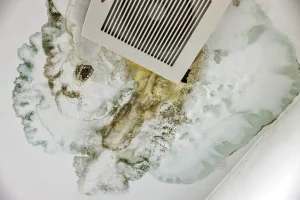
Often, the missing piece is mold.
Mold & Lyme: Not Either/Or
Mold illness does not cause Lyme disease.
But mold profoundly interferes with the body’s ability to control infections, including Lyme and its co‑infections. When mold exposure or biotoxin illness is present, it creates a physiologic environment where infections become more persistent, more reactive, and harder to clear.
This is why, clinically, mold must be tested for and addressed first — or at least concurrently — before aggressive Lyme treatment can succeed.
Mold Creates Functional Immunosuppression
One of the simplest ways to understand this is that mold creates functional immunosuppression.
This is not the same as classic immunosuppression from medications like steroids or chemotherapy. Instead, mold causes:
- Immune dysregulation
- Immune exhaustion
- Ineffective immune surveillance
The immune system is active — sometimes very active — but it is not effective where it needs to be.
How Mold Allows Lyme and Co‑Infections to Persist

1. Impaired innate immunity
Mycotoxins interfere with the function of macrophages, neutrophils, and natural killer cells — the immune cells responsible for early pathogen control.
When this first line of defense is weakened, infections are no longer efficiently cleared. Instead, they linger at low levels, waiting for opportunities to expand.
2. Shift away from effective pathogen control
Mold exposure often shifts immune signaling away from the cell‑mediated responses required to control intracellular and stealth organisms like:
- Borrelia (Lyme)
- Bartonella
- Babesia
- Chronic viral infections
The immune system becomes louder, but less precise.
4. Total body burden overwhelms the system
Mold illness significantly increases what we refer to as total body burden — the cumulative load of toxins, inflammatory signals, infections, and physiologic stressors the body is carrying at any given time.
When total body burden is high, the immune system has limited reserve. Adding aggressive antimicrobial treatment on top of an already overloaded system often pushes the body past its capacity.
Instead of progress, patients experience:
- Escalating inflammation
- Worsening symptoms
- Reduced tolerance to treatment
This is not because treatment is wrong — it’s because the body does not yet have enough bandwidth to process additional stress.
Reducing mold burden lowers the overall load on the system, creating room for the immune system to respond effectively rather than defensively.

The Clinical Pattern We See Repeatedly
When mold is present but unaddressed:
- Lyme treatment helps briefly, then plateaus
- Symptoms flare unpredictably
- Patients become reactive to treatments
- Progress feels fragile or reversible
When mold is identified and treated:
- Inflammation begins to settle
- Treatment tolerance improves
- The immune system regains coordination
- Lyme therapies often start working again — sometimes with far less intensity than before
This shift is not coincidental.
Why Testing for Mold Matters
Mold exposure is not always obvious. Many patients:
- Do not see visible mold
- Have lived in multiple environments
- Were exposed years earlier
- Do not connect their symptoms to buildings
Testing allows us to move beyond guesswork and determine whether mold is a primary driver, a co‑factor, or not relevant at all.
Without testing, patients may undergo months or years of antimicrobial treatment without addressing the underlying barrier to recovery.
The Right Sequence Matters
At Boulder Holistic, we do not view healing as a battle to be fought harder.
We view it as a process of restoring the conditions that allow the body to heal.
When mold is present, treating Lyme first is often like asking an exhausted, distracted immune system to do its most difficult job without support.
Addressing mold restores:
- Immune effectiveness
- Detox capacity
- Treatment tolerance
Only then can Lyme and co‑infections be approached with a realistic chance of lasting success.

The Takeaway
If Lyme treatment has stalled, backfired, or never fully worked, it’s not a failure of effort — and it’s not a failure of the patient.
It may be a sequencing problem.
Testing for and treating mold when it is present is often the key that allows Lyme treatment to finally work.
At Boulder Holistic Functional Medicine in Boulder, Colorado, this principle guides how we evaluate and care for complex chronic illness — thoughtfully, strategically, and with respect for the body’s limits.